
The Kindergarten Department is one of the specialized academic departments in the College of Basic Education at the University of Salahuddin/Erbil. Established in 2009, the department aims to prepare qualified personnel to work with preschool children through integrated educational and training programs. .
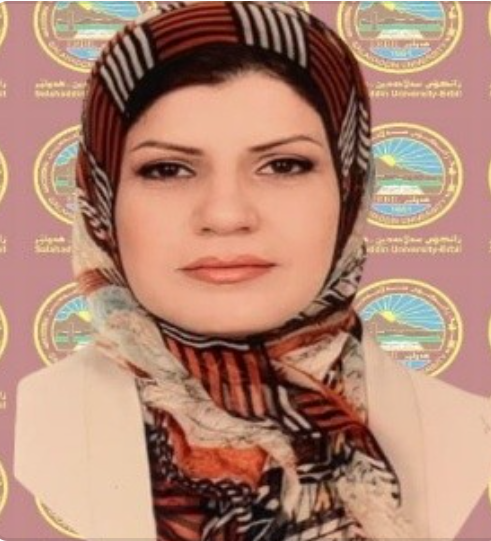
Full Name: Dr. Seenaa Ahmed Ali
Academic Title: Assistant Professor
Date of Birth:
Place of Birth:
Religion: Muslim
Ethnicity: Kurdish
General Specialization: educational psychology
Specific Specialization: educational psychology
Occupation: University Lecturer Workplace: Salahaddin University – College of Basic Education – Department of Kindergarten
Phone Numbers:
+964 750 460 6530
My name is Seenaa Ahmed, Ahead of the kindergarten Department since 1/11/2024 at the College of Basic Education-Salaheddin university, I graduated from the College of Education / University of Baghdad in 1998, and I got a master's degree in Kindergarten Arts / College of Education, University of Baghdad in 2003, and in 2012 I got a doctorate in educational psychology, In the year 2018, I was promoted to the degree of assistant professor, and since 2018 I have been assigned to manage the Department of Scientific Affairs and Postgraduate Studies at the College of Basic Education, and I have many published research papers in the field of educational psychology, and currently I supervise master's theses, as well as evaluate scientific research.
The Kindergarten Department strives to achieve excellence in preparing kindergarten teachers according to international standards, with a focus on child development in all aspects: psychological, educational, social, and physical.
VisionThe department is also committed to providing modern academic programs, encouraging scientific research, and strengthening community partnerships in the field of early childhood.
- Cognitive Domain and Comprehension
- The student will be familiar with educational and teaching concepts and terminology related to kindergarten.
- The student will understand the teaching and learning strategies and educational programs used in kindergartens and the modern learning theories associated with them.
- Mental and cognitive skills
- Explain and interpret appropriate teaching and learning strategies for kindergarten-aged children.
- Analyze and clarify kindergarten educational programs and understand their educational principles.
- Professional and Practical Skills
- Implementing diverse educational activities and evaluating them according to specific learning outcomes.
- Designing classroom tools and activities for kindergarten students based on their learning.
- Preparing educational and pedagogical plans that meet children's needs and implementing them effectively.
- Personal and Social Skills
- Design and conduct applied research addressing early childhood issues.
- Submit reports and document educational activities based on advanced scientific knowledge.
- Work as a team, assume professional responsibility, and develop oneself to serve the kindergarten environment.
The kindergarten department can establish partnerships with a number of departments such as the Kurdish language department, English language, Arabic language department, special education department, guidance department, general science department, as well as with the Faculty of Law and the Faculty of Nursing.
Degree Program Overview
The Kindergarten Department awards a Bachelor’s degree in Kinderarten
Key features of the Kindergarten program include:
- Core courses: includes subjects such as psychology, cognitive development, teaching thinking, language development, play psychology, tests and measures in kindergarten, and learning difficulties in kindergarten children.
- Elective courses: Environmental education, psychology of creativity, crisis management, pluralistic education, entrepreneurship, educational guidance and mental health.
- Research project: in the finely year to develop The student prepares a graduation research project within the department’s specialization.
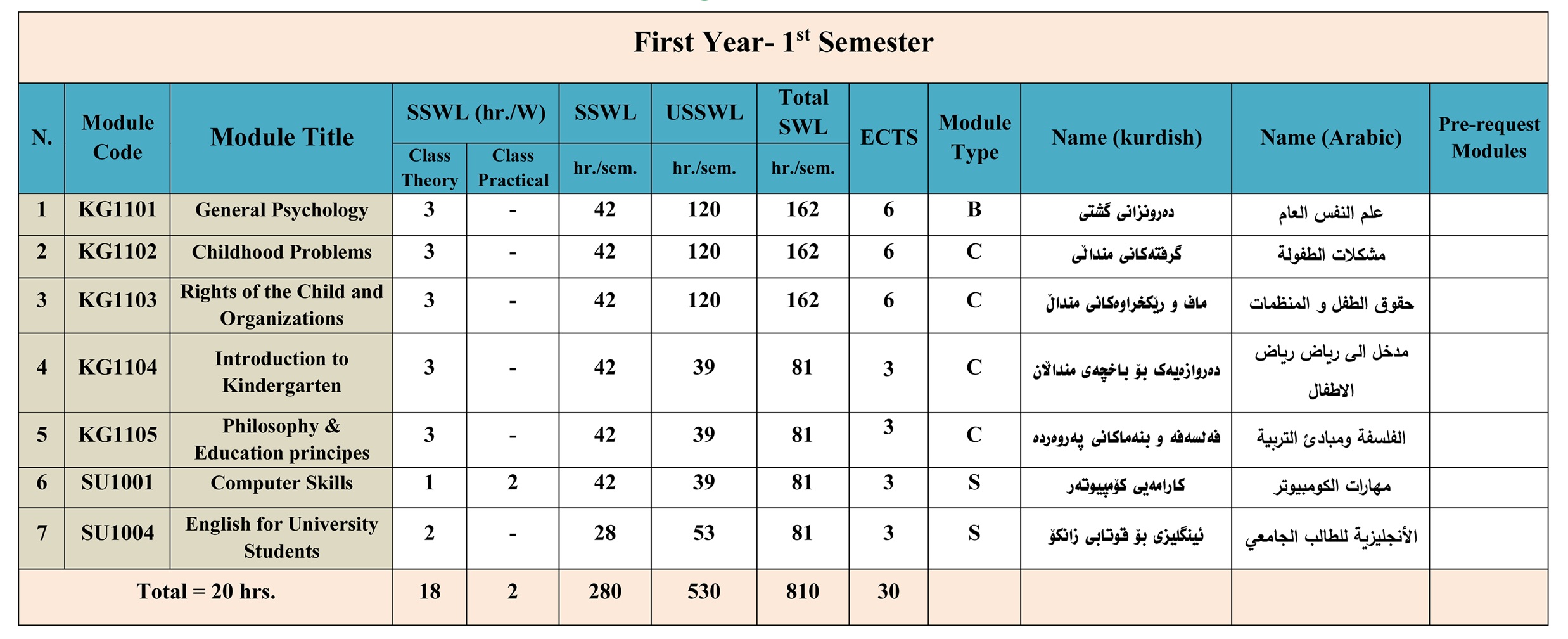
- First Semester:(ECTS-30) General Psychology, Childhood Problems, Children's Rights and Organizations, Philosophy and Principles of Education, Introduction to Kindergarten, Computer Skills, English for Undergraduate Students.
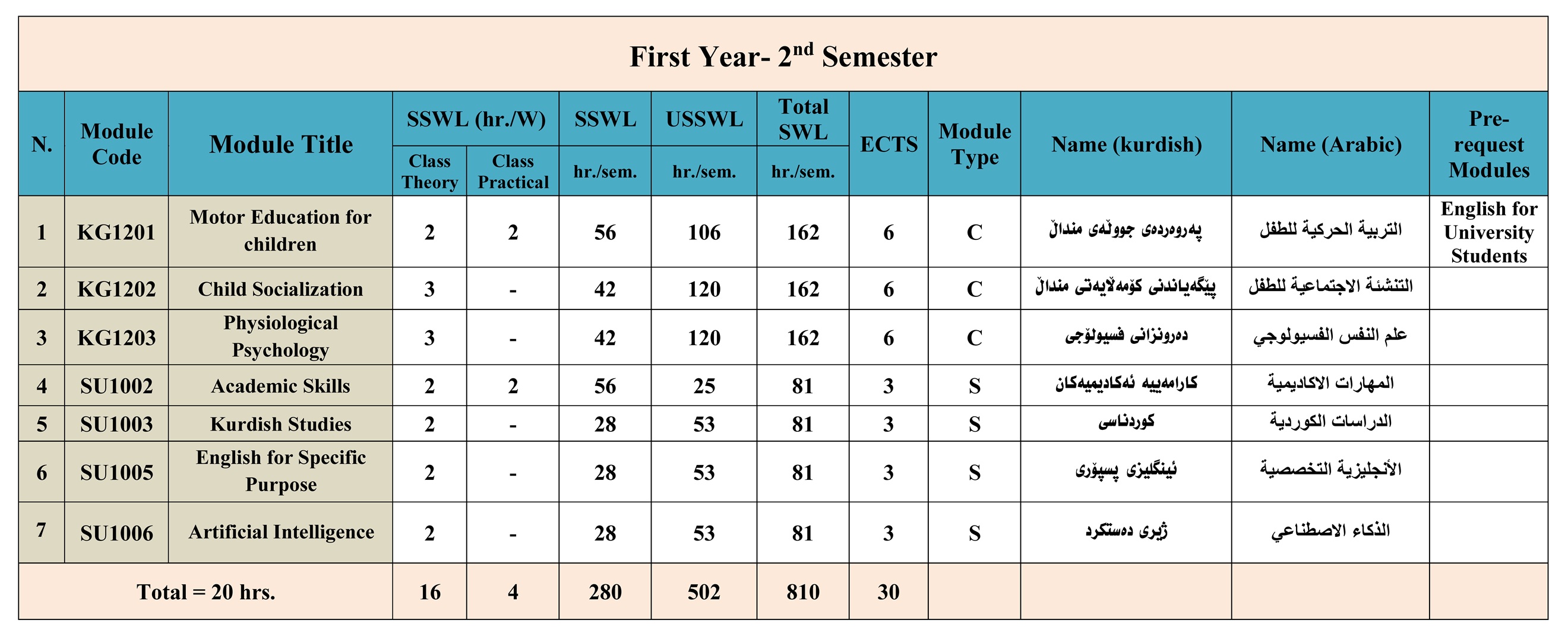
- Second Semester: :(ECTS-30) Child Motor Education, Child Socialization, Physiological Psychology, Academic Skills, Kurdish Studies, Specialized English.
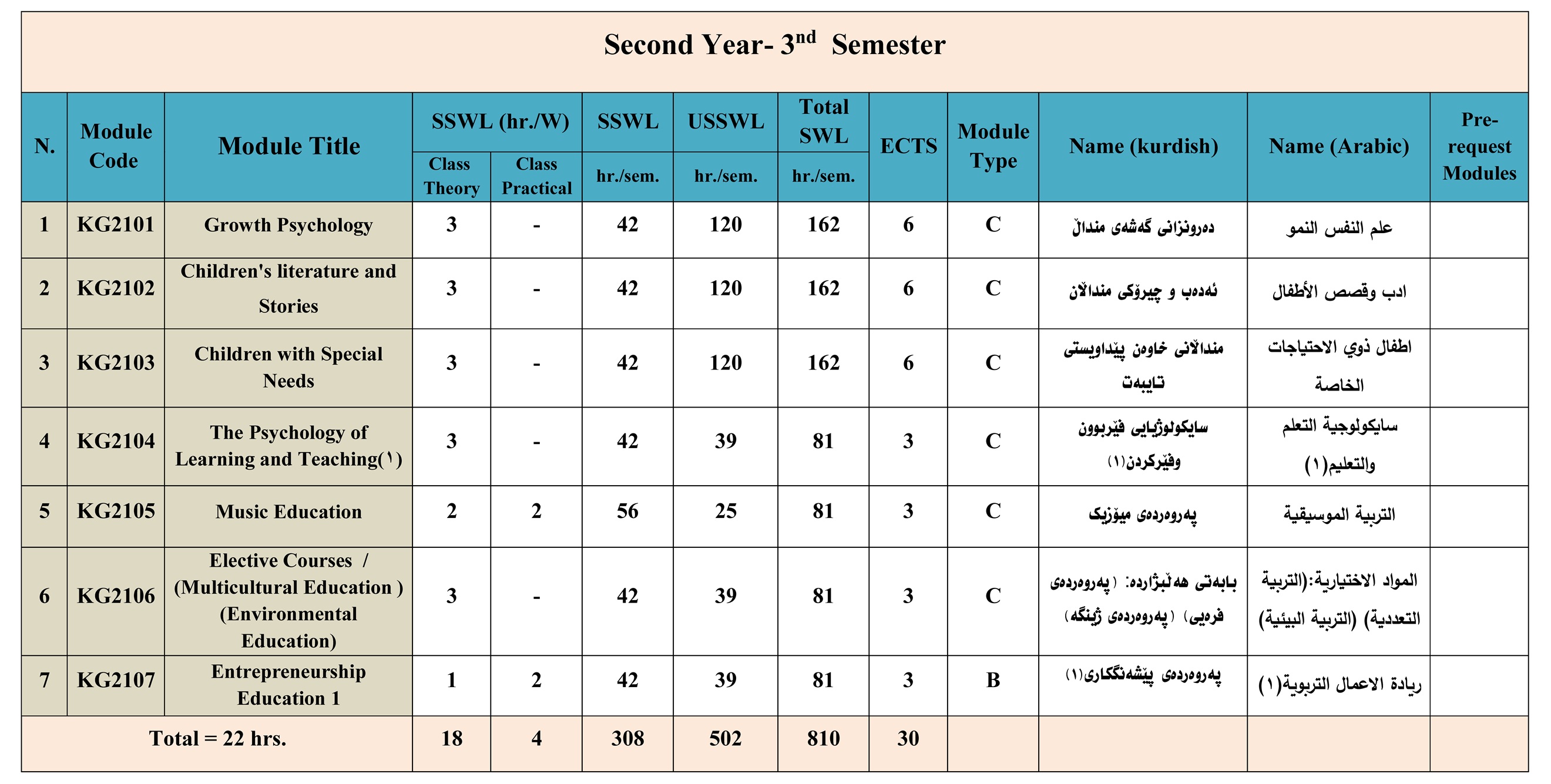
- Third Semester: (ECTS-30) Developmental Psychology, Child Learning and Teaching Psychology (1), Children's Literature, Children with Special Needs, Music Education, Elective Courses (Diversity Education, Environmental Education), Educational Entrepreneurship (1).
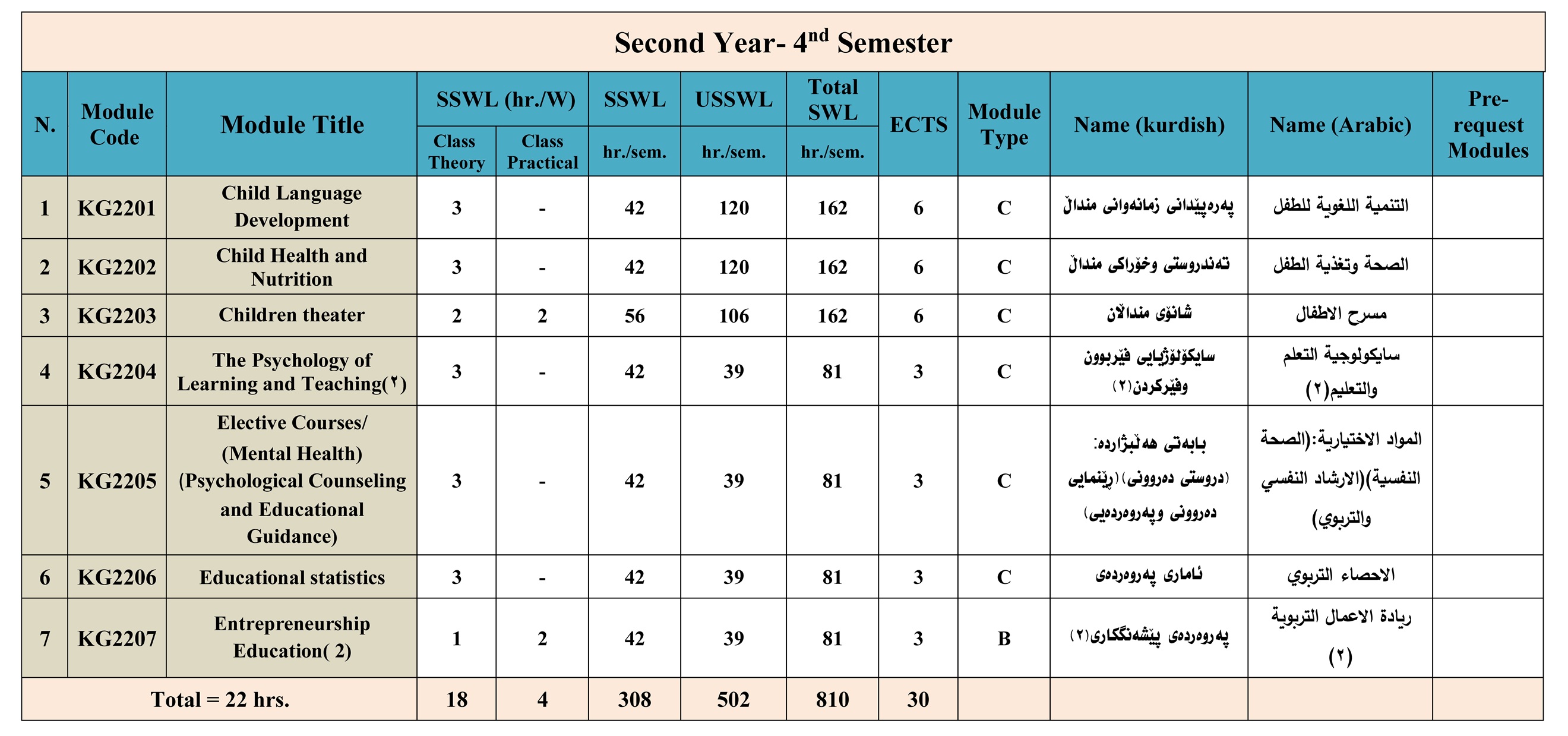
- Fourth Semester: :(ECTS-30) Child Language Development, Child Health and Nutrition, Children's Theater, Learning and Teaching Psychology (2), Elective Courses (Mental Health, Educational Psychological Counseling), Educational Statistics, Educational Entrepreneurship (2).
- Fifth Semester: Developing scientific and mathematical concepts, play psychology, children's learning difficulties, teaching methods, elective courses (cognitive psychology, creativity psychology), measurement and evaluation, program planning and implementation.
- Sixth Semester: Preparing children for reading and writing, personality psychology, behavior modification, drawing and artistic expression, observation, elective courses (first aid, crisis counseling), and research methodology.
- Seventh Semester: Educational Administration and Supervision, Child Nutrition, Psychology of Creativity, Graduation Thesis.
- Eighth Semester: Social Psychology, Kindergarten Evaluation Card, Elective Courses (Cognitive Psychology, Behavior Modification), Graduation Thesis.
Postgraduate Studies
- Program Tracks / Specializations
Depending on the institution, the master's program may offer one or more of the following tracks:
- Thesis Track: Emphasizes academic research and prepares students for doctoral studies.
Program Offerings:
- Thesis Track: Emphasizes academic research and prepares students for doctoral studies.
- Master in (M.A.)
- First Course: ( 30 ECTS) Child Development Theories, Early Childhood Curriculum Design, Educational Psychology
- Second Course: ( 30 ECTS) Assessment and Evaluation in Early Childhood, Research Methods in Education
- Elective subjects: Child Learning Difficulties, Child Health, Kindergarten Programs Psychological Counseling.
- Research Project or Thesis: ( 60 ECTS)
- Learning Outcomes:Focus on a topic relevant to early childhood education.
- Doctor of Philosophy (Ph.D.) : in one of the following specializations: ) Educational Psychology, Developmental Psychology, Kindergarten Curriculum)
Specialization Areas: Specializations available in the doctoral program include:
- Educational Psychology
- Developmental Psychology
- Kindergarten Curriculum
Focus Areas: The department aims to focus on building a healthy child's personality in all psychological, social and emotional aspects, and developing kindergarten programs to suit the requirements of the modern era.
ECTS Distribution:
Includes two academic years:
ECTS Distribution: (180 ECTS)
- Learning Outcomes: Focus on a topic relevant to early childhood education, He holds a PhD in one of the specializations of kindergarten.
- Admission Requirements Master Program : Hold a baccalaureate degree in kindergarten with a grade of 65% or higher, have an English language certificate, and pass the competitive exam.
- Ph.D. Program : Hold a master degree in kindergarten with a grade of 70% or higher, have an English language certificate, and pass the competitive exam.
- Career Opportunities : Holders of a master's or doctorate degree can work in higher education and scientific research institutions (governmental and private), in addition to working in educational institutions and educational organizations related to the same specialization.
Program Learning Outcomes
1. Child Development Knowledge Demonstrate a solid understanding of early childhood development, including physical, cognitive, emotional, and social growth of children from birth to age eight. Graduates will understand how young children learn and develop in various environments.
2. Teaching and Learning Strategies Apply age-appropriate teaching methods and learning strategies that promote curiosity, creativity, and active participation among young children. Graduates will be able to design and implement engaging learning activities that support holistic development.
3. Classroom Management Establish safe, inclusive, and supportive classroom environments that foster respect, cooperation, and a love for learning. Graduates will use positive behavior management strategies suited to young learners.
4. Curriculum Planning and Implementation Plan and deliver developmentally appropriate curricula that integrate language, math, science, arts, and social skills in a playful and meaningful way. Graduates will be skilled in adapting lesson plans to meet the diverse needs of children.
5. Observation and Assessment Use observation and assessment tools to monitor children's progress and development. Graduates will be able to identify individual needs and support each child's growth through informed decision-making.
6. Communication and Collaboration Communicate effectively with children, families, and colleagues. Graduates will be able to build positive relationships with parents and engage in teamwork with other educators to support children's learning.
7. Ethical and Professional Conduct Demonstrate a strong sense of ethics, responsibility, and professionalism in working with young children and their families. Graduates will respect confidentiality and uphold child protection and safety standards.
8. Lifelong Learning and Development Engage in continuous professional development and stay informed about the latest research and practices in early childhood education. Graduates will be reflective practitioners who adapt to changing educational needs.
9. Creativity and Innovation Incorporate creative activities, storytelling, music, and play-based learning to stimulate imagination and joyful exploration among young children. Graduates will encourage curiosity and independent thinking.
Bachelor's degree (B.A.) in Kindergarten (First Cycle)
Four Year's Curriculum Program, 240 ECTS Credits, 1 ECTS = 27hrs.
Admissions
- Zankoline (Government-Funded) Study
- Description: This option provides free tuition for students who meet the eligibility criteria and are accepted through the general centralized admission system, known as "Zankoline."
- Eligibility:
- Applicants must meet the academic requirements as set by the Ministry of Higher Education and Scientific Research.
- Selection is competitive and based on high school scores, particularly in scientific subjects such as kindergarten .
- Benefits:
- Exemption from tuition fees.
- Access to full university services and facilities, including labs, libraries, and extracurricular activities.
- Opportunity to benefit from scholarships and other government-sponsored initiatives.
- Parallel Study (Self-Funded)
- Description: This option allows students who do not secure a Zankoline seat to pursue their studies by paying a tuition fee.
- Tuition Fee: (1,500,000) IQD per year.
- Eligibility:
- Students must meet the minimum academic requirements for admission to the literary subjects programs.
- This option offers an opportunity for students who did not secure a government-funded seat to study while paying the tuition fee.
- Benefits:
- Access to the same high-quality education, resources, and facilities as Zankoline students.
- Students can pursue their academic goals without being limited by centralized admission quotas, ensuring they receive the same academic and professional opportunities.
Admission Requirements for Both Tracks
- Academic Qualifications:
- Completion of high school with a focus on the Scientific and literary track.
- Minimum GPA as determined by the Ministry of Higher Education and Scientific Research.
- Application Process:
- Zankoline (Government-Funded)
- Apply through the centralized admission system for Zankoline.
- Submit required documents, including high school transcripts, national ID, and other certificates as per the application guidelines.
- Parallel Study (Self-Funded)
- Apply directly to the Department of kindergarten for parallel study.
- Submit required documents, including high school transcripts, identification, and relevant certificates, along with the tuition fee payment details.
- Zankoline (Government-Funded)
The Department of Kindergarten has produced approximately (50) graduates in recent years, many of whom have gone on to pursue careers in teaching, educational support, and literary fields across both public and private sectors
Graduate Employability:
- Kindergarten teacher (government, private).
- Child development specialist, educational supervisor, kindergarten or daycare center director.
- Developmental assessment specialist, educational content specialist, or educational program developer.
- Bachelor of Arts (B.A.) in: Bachelor's degree in Kindergarten.
- Career Paths: Kindergarten and early elementary school teacher.
- Program coordinator, responsible for programs for children with special needs.
- Skills for Employability: Volunteer or fieldwork: In kindergartens or early intervention clinics for practical opportunities.
- Master of Arts (M.A.) in Kindergarten.
- Career Paths: Teaching at public and private universities.
- Opening training centers for children, kindergarten teachers, and parents as needed.
- Skills for Employability:
- Curriculum Design and Evaluation: Proficient in developing advanced curricula that meet master's standards and analyzing educational data to guide educational progress.
- Advanced Behavior Management: Using positive discipline techniques, effective conflict resolution, and behavior modification based on psychological analysis.
- Educational Technology Integration (EdTech): Working with digital platforms, teaching and communication applications, and leveraging artificial intelligence tools to support student diversity.
- Career Paths: Teaching at public and private universities.
- Doctor of Philosophy (Ph.D.) in PhD: in one of the specializations of the Kindergarten Department.
- Career Paths:
- Early childhood researcher, educational policy consultant, or educational institution trainer.
Skills for Employability:
- Enroll in professional courses such as Advanced Curricula in Early Childhood and Artificial Intelligence in Education.
- Practical Training: Real-world classroom experience, mentoring from experienced teachers, facilitates application and deep learning.
- Networking and Mentoring: Join educational associations, attend conferences, and benefit from academic and professional guidance.
- Self-Assessment and Feedback: Gather peer and professor reviews, and document progress using a professional portfolio.
- Continuous reading of emerging theories (such as artificial intelligence and embedded learning), and participation in research curriculum development.
Academic Advising Services:
- Primary Role: Supporting students with academic planning and course selection, and monitoring academic performance to help achieve success and timely graduation.
- Practical Outcomes: The advisor develops a personalized plan aligned with career goals—recommending courses and activities that support future career paths.
- Comprehensive Support: Includes sessions on study skills, time management, crisis counseling, and connecting students with services such as special education and psychological support.
Internship Opportunities:
- Internships are a vital way to connect theoretical knowledge with real-life professional application. They span a variety of academic and professional fields, whether paid or voluntary. They are typically coordinated by/through university-based collaborative work centers, or through partnerships with government and private institutions.
Benefits of Internships:
- Gain practical experience that helps enhance and differentiate your CV.
- Understand the dynamics of work and build professional networks within the sector.
- Explore career interests and gain real-life experience in your field of specialization before graduating.
Types of internship opportunities:
- Internships: Paid or unpaid, full-time or part-time, typically lasting from 1 to 4 months.
- Work-Integrated Learning: Includes programs such as co-op, clinical or field placements, research projects, and school-based community service.
How to Apply for Internships:
- Receive academic/career guidance to identify appropriate options.
- Prepare a resume and cover letter with the help of the Career Center or its services.
- Use the workshops and interview simulations offered.
- Follow the university's platforms to learn about opportunities and apply.
Career Services:
- Critical and personal assessments to improve professional profiles.
- Preparing students for job interviews and boosting self-confidence.
- Tests to identify interests and match them to future majors and jobs.
- Organizing recruitment meetings and events inside and outside the university to strengthen relationships with industry professionals.
- Tools and techniques for job searches during and after graduation.
- Utilizing the alumni network to enhance training and employment opportunities.
Key Career Services Offered:
- Individual or group sessions to discuss career goals, majors, and personality tests.
- Individual reviews and practical workshops to fine-tune resumes and cover letters according to the target field.
- Mock interviews of various types (behavioral, technical, and remote) with feedback to improve performance and confidence.
- Workshops to enhance students' awareness of their career goals and values, explore majors, and connect them to the job market.
- Events to connect students with employers and alumni, access alumni databases for internship and employment opportunities.
- Organizing on-campus career fairs, attending companies to recruit students or intern during their studies.
- Training on building professional character, such as communication, negotiation, formal online behavior, and preparing a professional LinkedIn and CV.
Benefits of Career Services:
- Increased opportunities for paid internships and jobs after graduation.
- Free, professional support in CV development, interview techniques, and digital portfolio building.
- Effective professional networking through events, alumni, and employers to provide real opportunities.
- Continued support after graduation for career guidance and post-university life management.