
Social Sciences
The Department of Social Sciences was established to prepare teachers in the field of teaching social issues in grades (4, 5, 6, 7, 8, and 9) for the primary education level in the Kurdistan Region's education system. During the four-year undergraduate course، students in this department will be trained and prepared according to a specific program of social issues، including the study of history in general and Kurdish history in particular..
They will also become familiar with the subject of geography in general and the natural and human geography of the Kurdistan Region. In addition to these، they will become proficient in educational and psychological subjects such as teaching methods، general psychology، educational psychology، measurement، evaluation and management. This means that the graduates of this department will be active in the field of work in an educational and scientific manner.
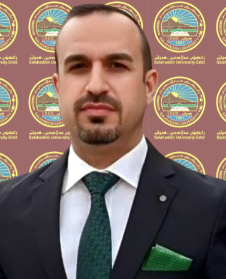
Full Name: Dr. Hamed Abdullah Salih
Academic Title: Assistant Professor
Date of Birth:
Place of Birth:
Religion: Muslim
Ethnicity: Kurdish
General Specialization: Geography
Specific Specialization: Political Geography and Sustainable Development
Occupation: University Lecturer Workplace: Salahaddin University – College of Basic Education – Department of Social Sciences
Phone Numbers:
+964 750 465 9310
Hamed Abdullah Salih, an Assistant Professor of Geography, boasts a distinguished academic career marked by numerous achievements and excellence. He embarked on his academic journey at Salahaddin University, where he earned his Bachelor's and Master's degrees in Geography. He then pursued his Ph.D. in Geography at the University of Mosul's College of Education.
Since his appointment as a lecturer at the College of Basic Education in 2002, Hamed has demonstrated unwavering dedication to his work and continuous growth in his academic career, eventually becoming an Assistant Professor. Throughout his journey, he has participated in various prestigious training programs, including the Teaching Methods course at Salahaddin University and the Entrepreneurship course at the University of Nuremberg in Germany, further enhancing his skills and expertise.
As an Assistant Professor, Hamed possesses extensive teaching experience, having taught a range of undergraduate and graduate courses. He has also enriched the scientific community with numerous research papers in diverse fields, including sustainable development, environmental pollution, and tourism. His research, such as the study on the United Nations' role in resolving the Kurdish regions' issue and the impact of transportation on noise pollution, reflects his profound thinking and insightful vision.
Hamed's contributions extend beyond teaching and research, as he has actively participated in numerous scientific conferences within Iraq and abroad, presenting valuable research that has contributed to the scientific discourse. Additionally, he is a member of several esteemed professional organizations, including the Kurdistan Teachers' Union and the Human Development Organization, demonstrating his commitment to professional excellence and community engagement.
Digitally, Hamed maintains a strong presence on academic social networks, where his research and activities can be followed on platforms like Google Scholar, ResearchGate, and LinkedIn, facilitating access to his achievements and collaboration with others. Through these efforts, Hamed Abdullah Salih remains a prominent figure in the academic landscape, inspiring his students and colleagues with his excellence and dedication.
To provide distinguished academic education in the field of social sciences, and to conduct innovative scientific research that contributes to the understanding of social, cultural, political and economic phenomena.
VisionTo become a leading centre in the field of social sciences, providing distinguished scientific education and research that meets the needs of society.
Students gain deep knowledge in the social sciences, including theories, concepts, and research approaches. Skills: Students develop scientific research skills, critical analysis, and creative thinking. Values: Students acquire values such as commitment to scientific research, objectivity, and respect for cultural and social diversity.
The department cooperates with other universities to exchange experiences and scientific research.
Government Institutions: The department cooperates with government institutions to provide scientific advice and research that contribute to the development of public policies.
Civil Society: The department cooperates with civil society organizations to implement research and service projects that contribute to the development of society.
Private companies: The department cooperates with private companies to provide scientific consultations and research that contribute to business development.
The Social Sciences Department awards a Bachelor’s degree in Social Sciences duration of study 4 years.
- Program Objectives: To provide students with the knowledge and skills necessary to analyze social, cultural, political and economic phenomena.
- Degree Program Overview Courses: Courses in the Social Sciences program include topics such as sociology, history, geography, philosophy, and economics.
- Majors: Students can specialize in one of the fields of social sciences, , history, geography.
- Key Features of the Comprehensive Education Social Sciences Program: The program equips students with comprehensive knowledge in the field of social sciences.
- Critical Analysis: The program encourages students to critically analyze social, cultural, political, and economic phenomena.
- Research: The program encourages students to conduct scientific research in the field of social sciences.
- Career Development: The program equips students with the necessary skills for career development in various fields.
- Program Structure Core Courses: Core courses in the program include topics such as sociology, history, geography, and philosophy.
- Specialized Courses: Specialized courses in the program include topics such as applied sociology, modern and contemporary history, human geography, and social philosophy.
- Research Project: Students are required to conduct a research project in the field of social sciences.
- Career Readiness and Development Necessary skills: The program equips students with the necessary skills for career development in various fields, such as critical analysis, scientific research, and effective communication.
- Available Positions: Graduates of the Social Sciences program can work in various fields, such as research, education, and social work.
- Continuing to study: Graduates of the Social Sciences program can continue to study in graduate programs.Master's Program Duration of study: 2 years. Number of credit hours: 36 credit hours. Courses:
- Core Courses: Educational Sciences, History, Geography, Philosophy. Specialized courses: Educational Sciences, Modern and Contemporary History, Human Geography.
- Scientific Research: Students are required to conduct scientific research in the field of social sciences.
- Learning Outcomes: Students gain deep knowledge in the field of social sciences. Students develop scientific research skills and critical analysis. Students gain the ability to apply knowledge in the field of social sciences.
Postgraduate Studies
- Program Offerings
- Master (M.Sc) or Master
- Areas of Focus: The department aims to focus on building versatile knowledge across key scientific areas, with an emphasis on interdisciplinary links rather than specialized expertise. This prepares learners to approach real-world problems (e.g., climate change, drought and solving population problems) from multiple angles.
It includes two academic years:
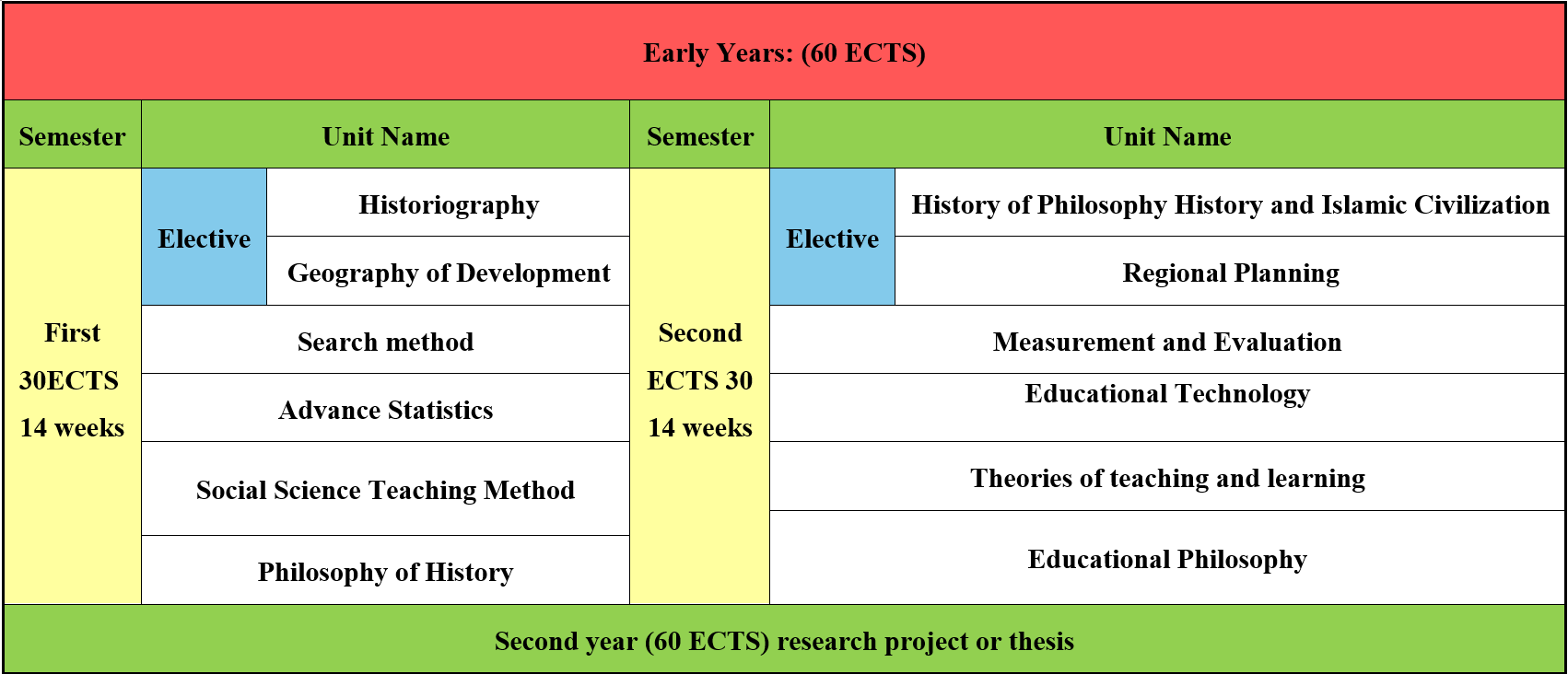
- First Course: (30 ECTS) Geography of Resource Development, Philosophy of History, Statistics, Teaching Methods of Social Sciences, Research Methods in Education
- Second Course: (30 ECTS) Measurement and Evaluation, Philosophy of Education, Human Problems, Theories of Teaching and Learning, Electives
- Electives: Geography of Resource Development, History of Islamic Thought and Civilization, ,
- Research project or dissertation: (60 ECTS)
- Learning Outcomes: Focus on a relevant topic to prepare students to be researchers and professionals in science or pedagogical teaching methods.
- Doctor of Philosophy (Ph.D.): in one of the following specializations (Methods of Teaching Social Sciences)
- Areas of Specialization: The specializations available in the PhD program include:
- Science Teaching Methods
- ECTS Distribution: (180 ECTS)
- Learning Outcomes: Focus on a relevant topic to prepare students to be researchers and professionals for pedagogy or teaching methods of social sciences, and he holds a Ph.D. degree in one of the disciplines of social sciences.
- Admission Requirements Master Program: Hold a baccalaureate degree in Social Science with a grade of 60% or higher, have an English language certificate, and pass the competitive exam.
- Ph.D. Program: Hold a master degree in General Science with a grade of 70% or higher, have an English language certificate, and pass the competitive exam.
- Career Opportunities: Holders of a master's or doctorate degree can work in higher education and scientific research institutions (governmental and private), in addition to working in educational institutions and educational organizations related to the same specialization.
- Master (M.Sc) or Master
Social Science Department / Master Course
Academic Program / First and Second Semester
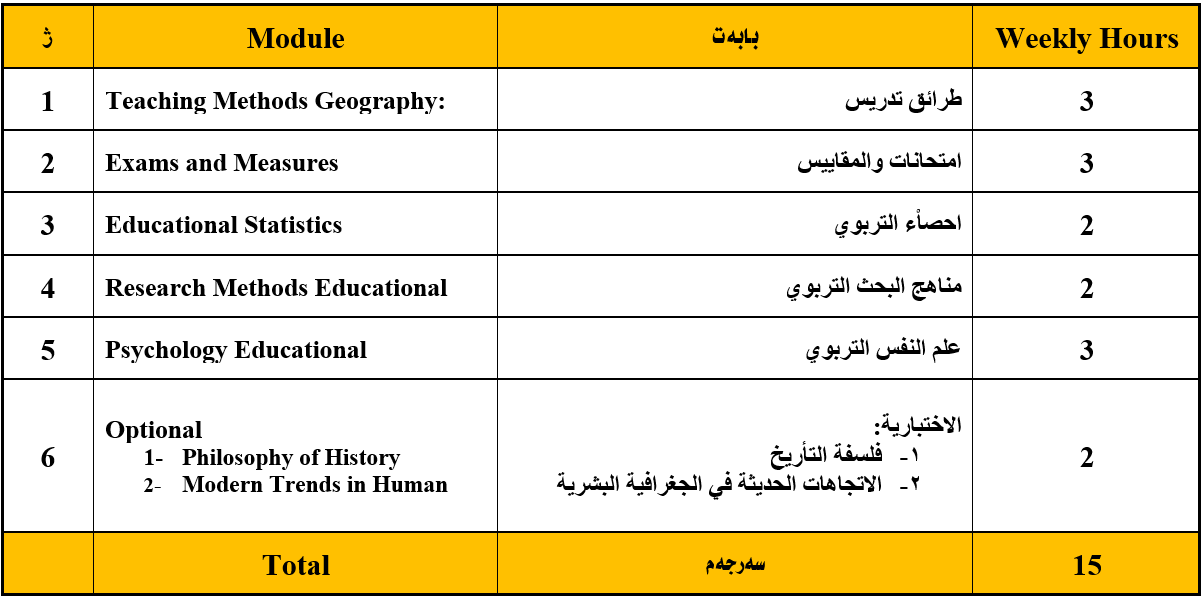
Ph.D. Study Program in Methods of Teaching Science
College of Basic Education / Social Science Department
Program Learning Outcomes
Upon the successful completion of the Social Sciences programs, graduates of the Social Sciences Department will demonstrate the following learning outcomes:
- Comprehensive Knowledge:
- Fieldwork and Technical Proficiency:
- Critical Thinking and Problem-Solving:
- Ethical and Environmental Responsibility:
- Problem-Solving and Analytical Skills:
- Effective Communication:
- Career Readiness:
- Lifelong Learning and Adaptability:
- Research and Innovation:
Students gain deep knowledge in the field of social sciences. Students develop scientific research skills and critical analysis. Students gain the ability to apply knowledge in the field of social sciences.
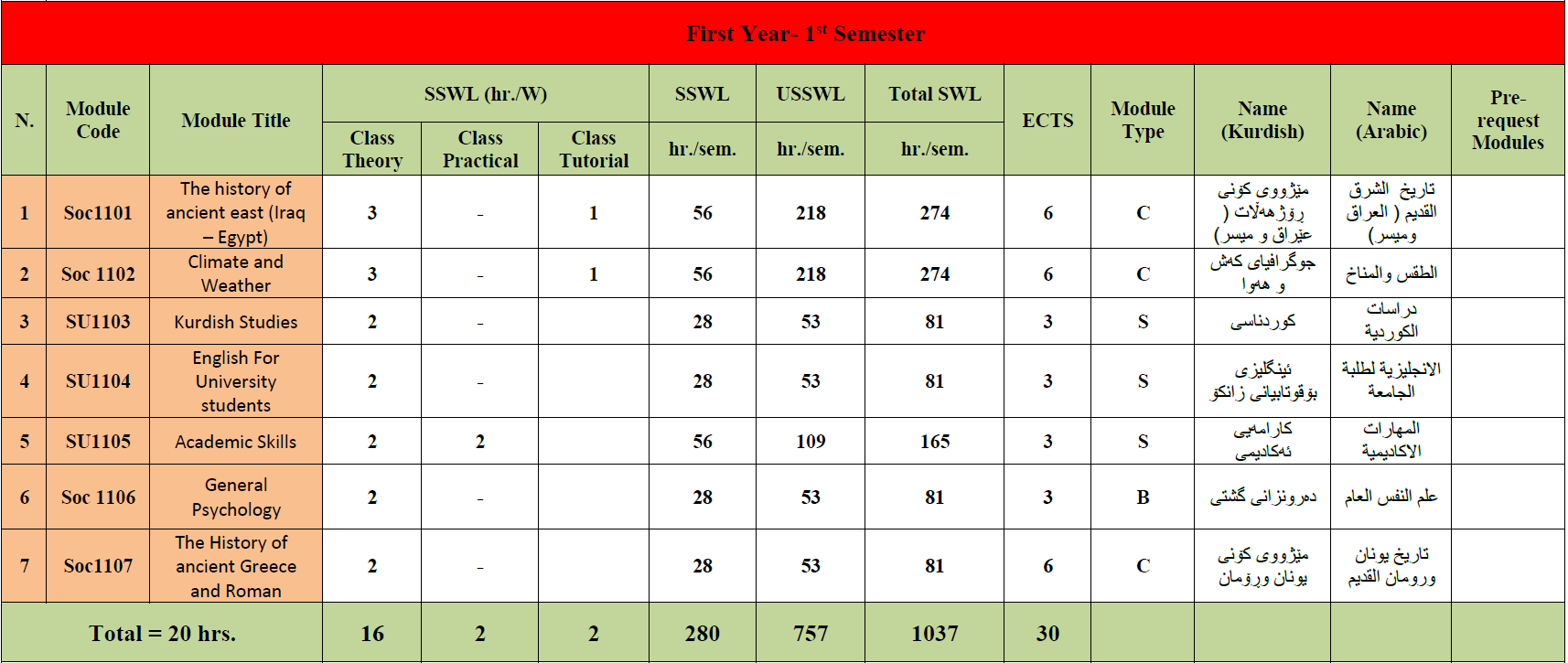
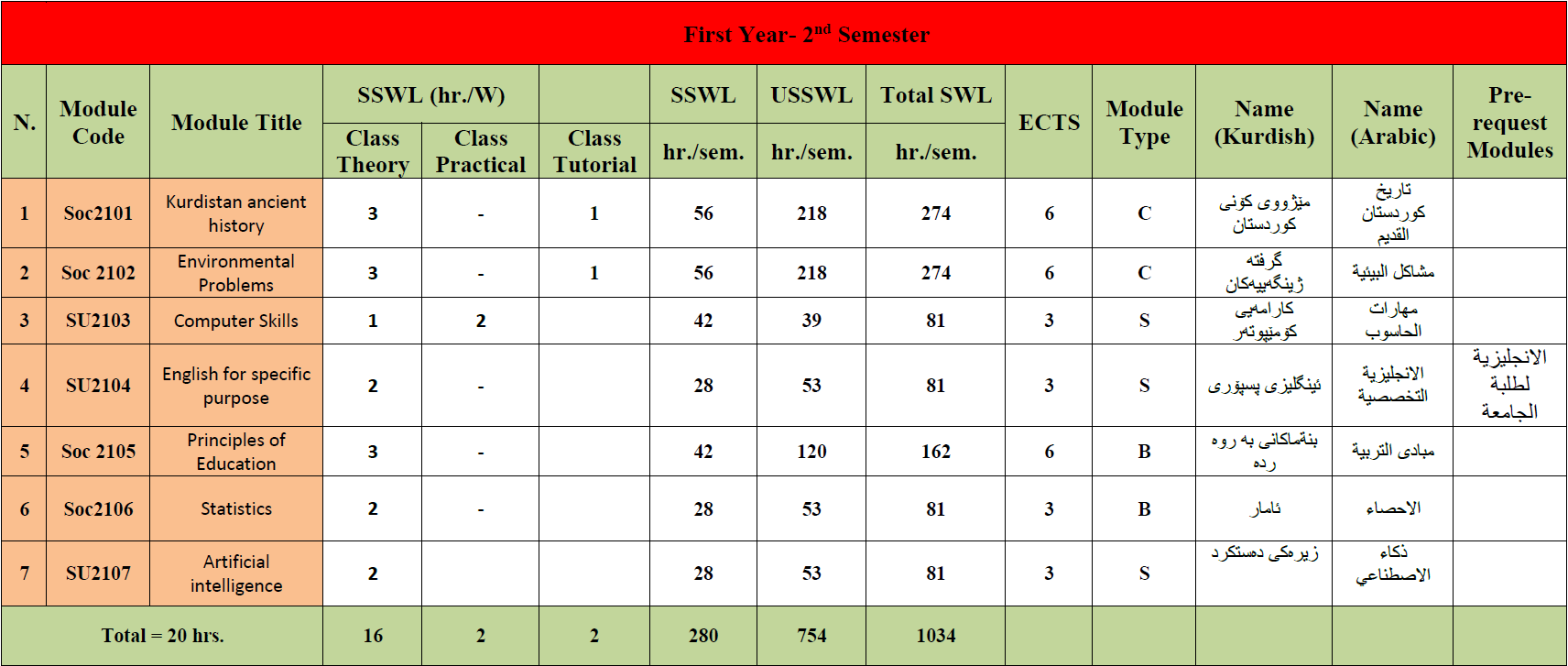
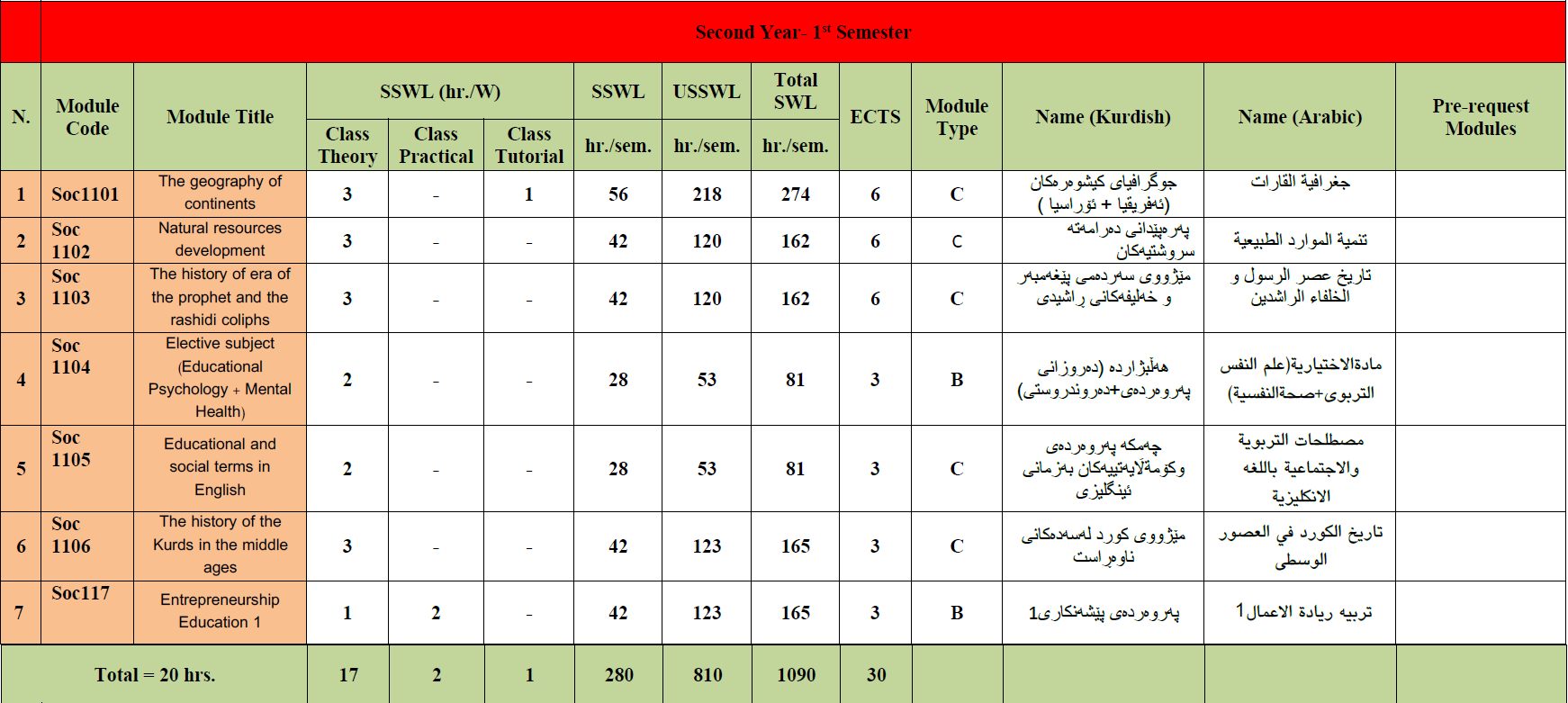
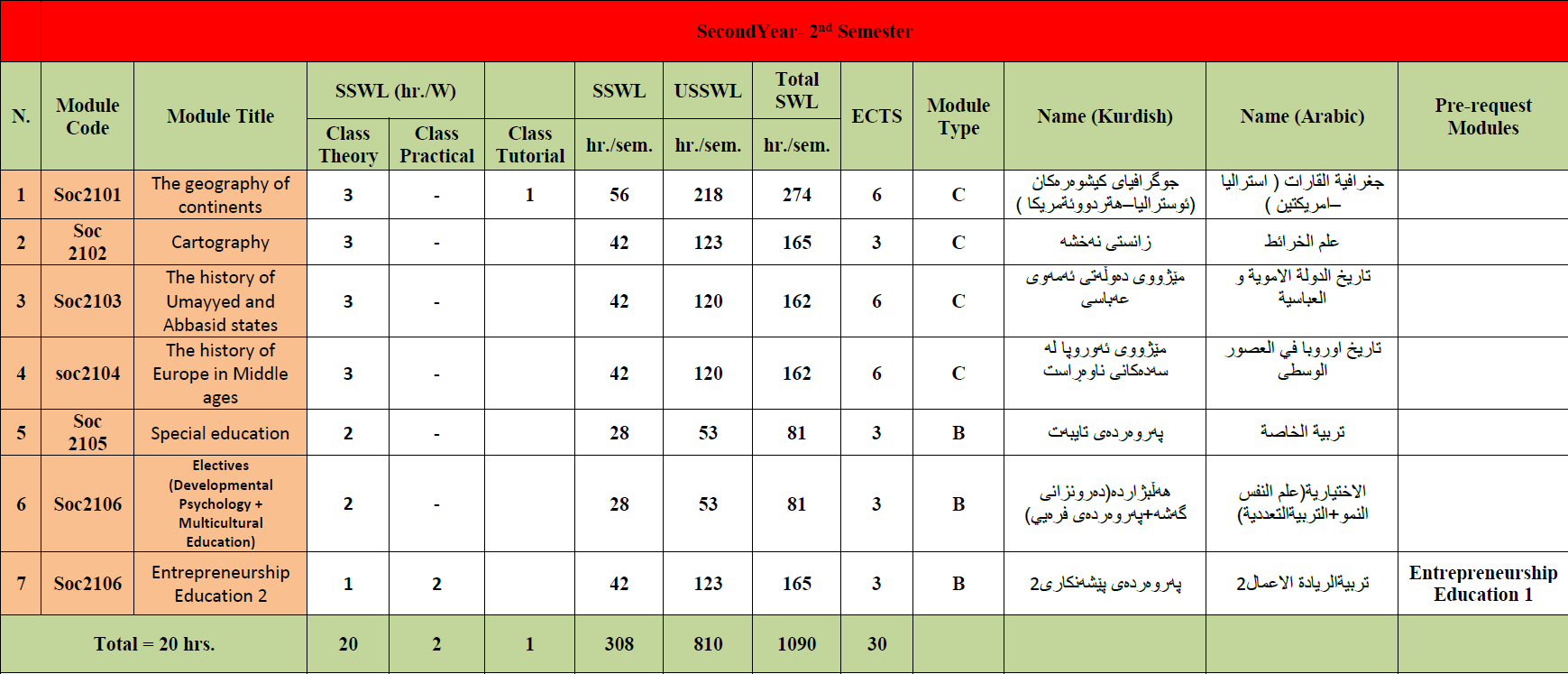
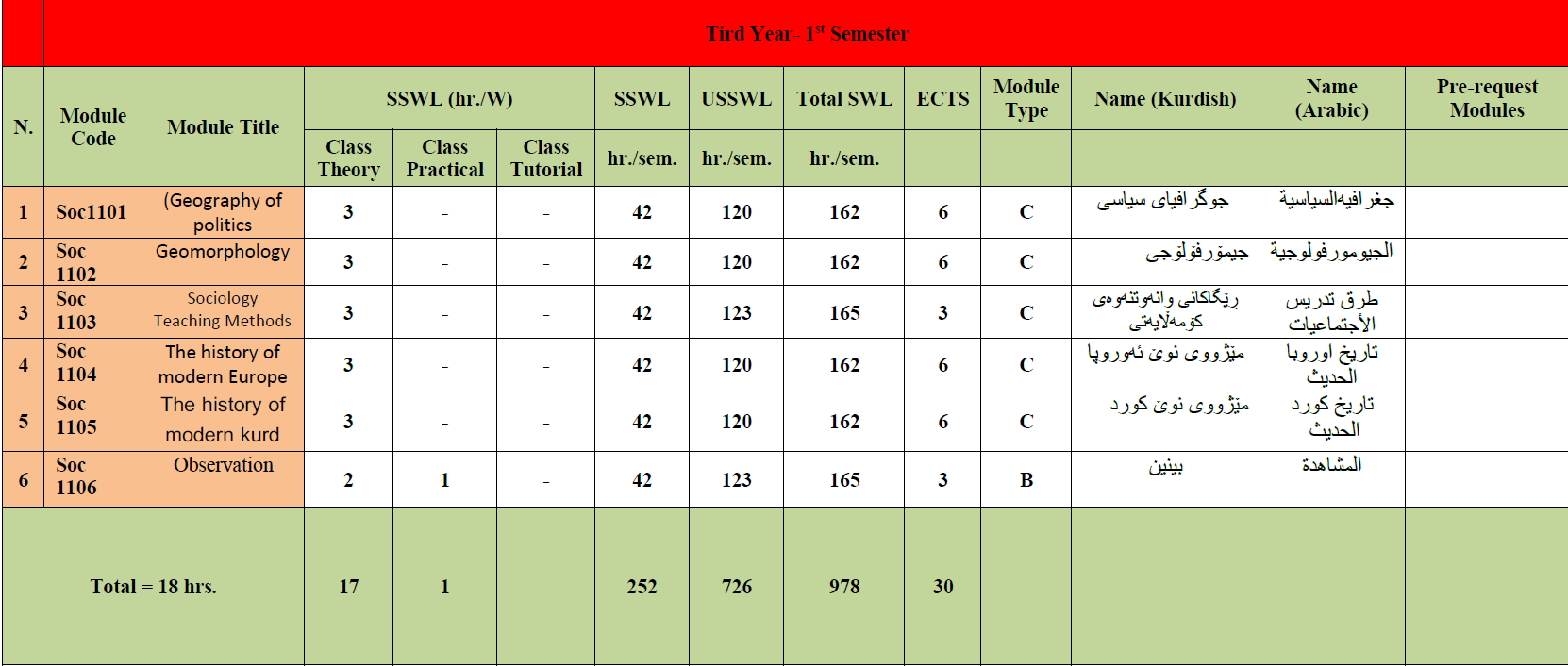
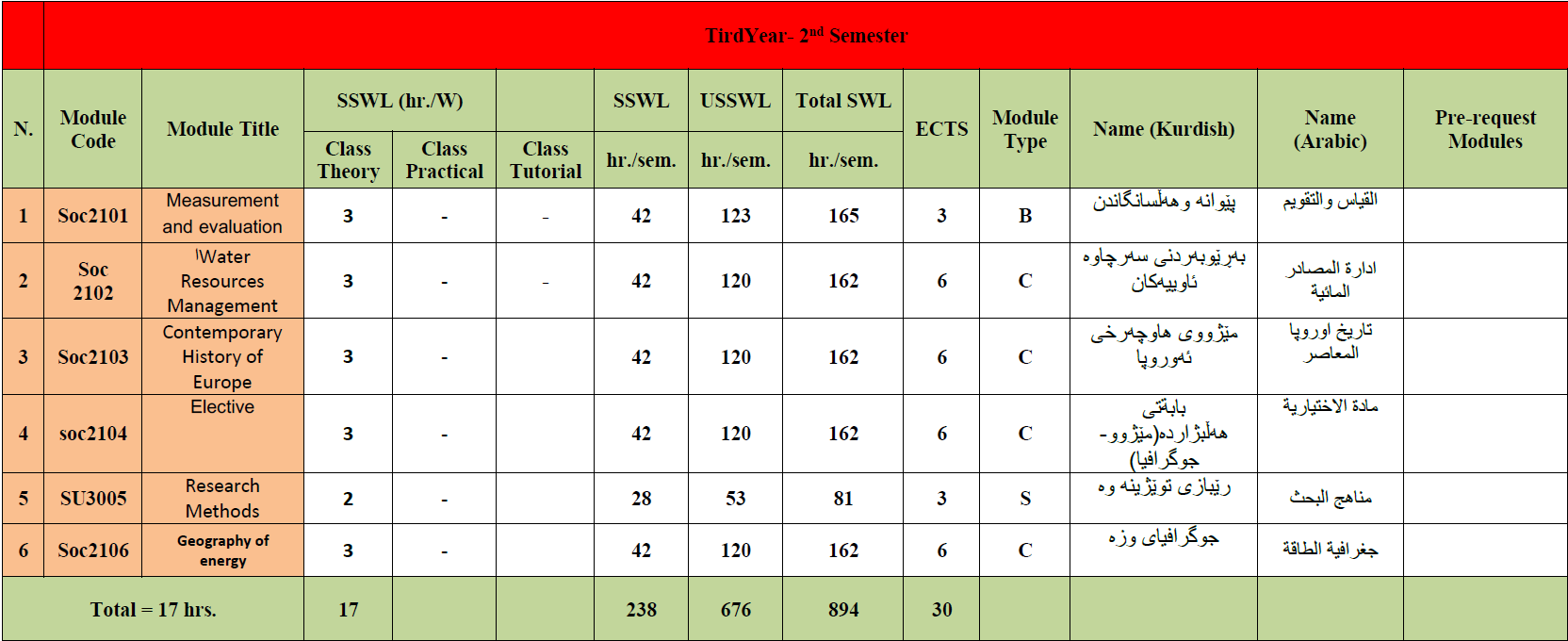
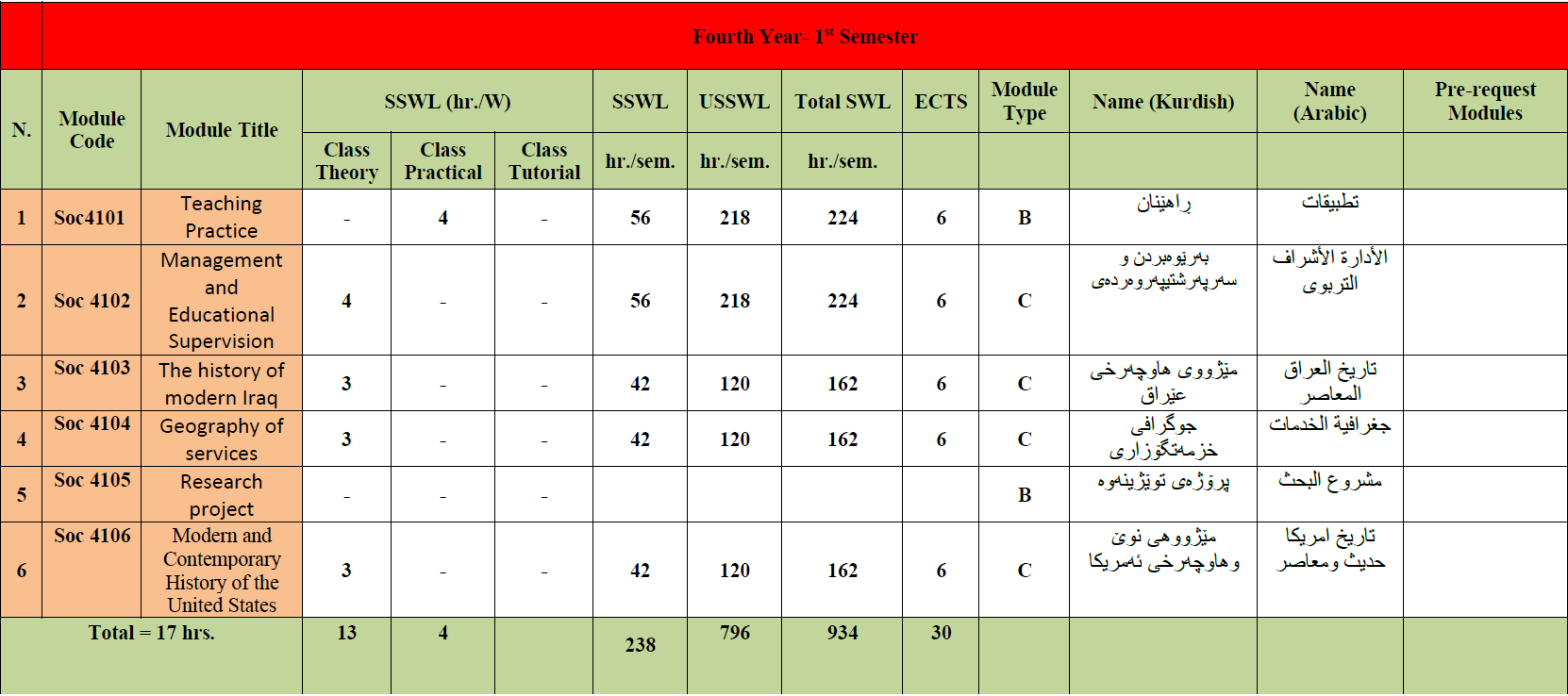
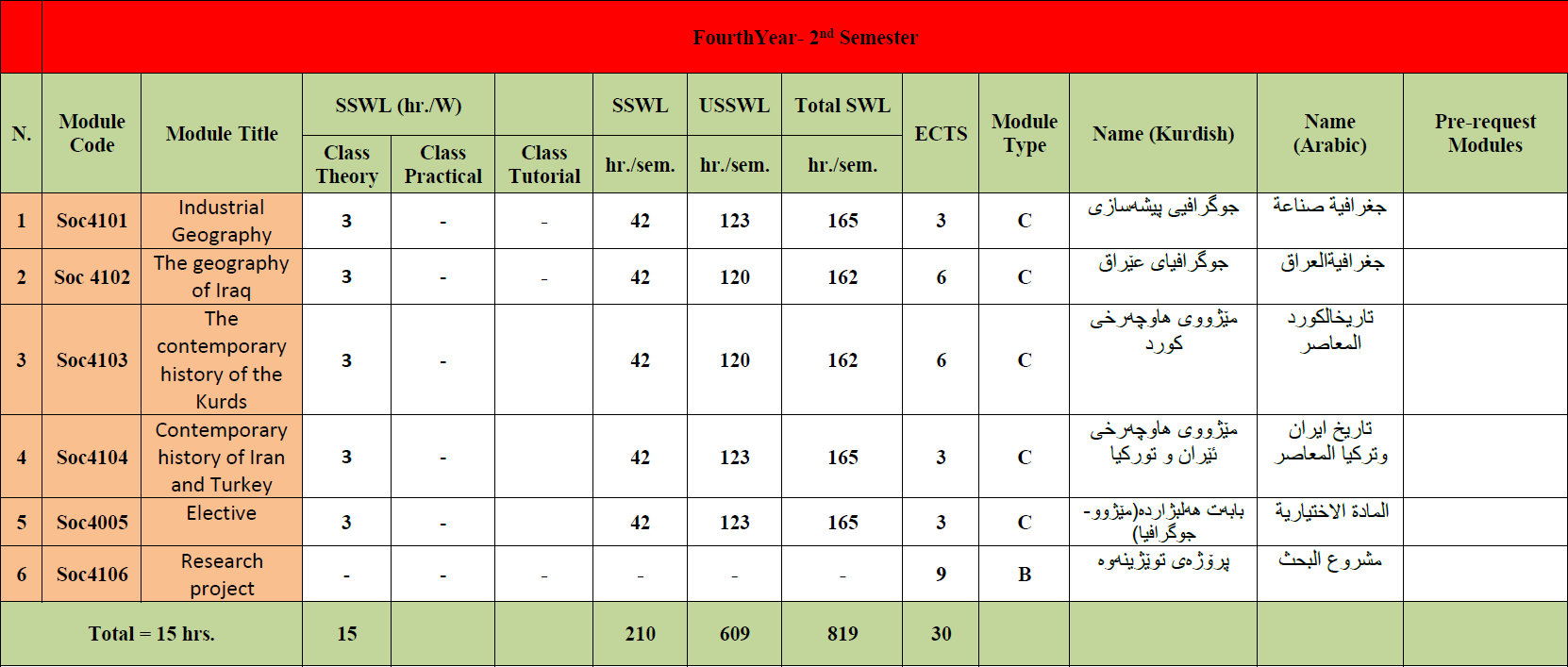
Bachelor's degree (B.A.) in Social Science (First Cycle)
Four Year's Curriculum Program, 240 ECTS Credits, 1 ECTS = 27hrs.
Admissions
The Social Sciences Department offers two distinct study options for prospective students, offering accessibility and flexibility to accommodate diverse individual circumstances:
- Zankoline (Government-Funded) Study
- Description: This option grants tuition-free education to students who meet the eligibility criteria and are accepted through the general centralized admission system, commonly known as "Zancoline."
- Eligibility:
- Applicants must meet the academic requirements set by the Ministry of Higher Education and Scientific Research.
- Selection is competitive and based on high school scores, particularly in literary subjects such as geography and history.
- Benefits:
- Exemption from tuition fees.
- Access to full university services and facilities, including labs for geographical studies, computer lab and fieldwork opportunities.
- Parallel Study (Self-Funded)
- Description: This option enables students who do not secure a seat through the Zancoline system to pursue their studies by paying a tuition fee.
- Tuition Fee: 1,000,000 IQD per year.
- Eligibility:
- Applicants (student) must meet the minimum academic requirements for admission to the Social Science program.
- This option offers additional opportunities for students to meet the Zancoline criteria and catch up on any necessary prerequisites.
- Benefits:
- Access to the same high-quality education, resources, and facilities as Zankoline students.
- Students can pursue their academic goals without being restricted by centralized admission quotas.
- Opportunities for hands-on experience in geographical through lab work and field trips.
Admission Requirements for Both Tracks
- Academic Qualifications:
- Completion of high school with a strong emphasis on literary subjects (geography and history).
- A minimum GPA as determined by the Ministry of Higher Education.
- Application Process:
- Apply through the centralized admission system for Zankoline.
- Submit required documents, including high school transcripts, identification, and certificates.
- Language Proficiency:
- Basic proficiency in Arabic is required, as several courses in Social Science programs are taught in Kurdish.
- Proficiency in Kurdish is beneficial for better integration into academic and social activities.
This structure ensures that prospective students can navigate their educational options in Social Science Department while having access to critical resources and opportunities
Graduates
The Department of Social Sciences produced approximately 1200 graduates in the years 2004-2025, many of whom went on to pursue careers in teaching, educational support, and scientific fields in the public and private sectors.
Graduate Recruitment
- Bachelor of Arts (B.A) in Social Sciences
- Career Paths:
- School Science Teachers in the Public and Private Sectors
- Educational facilitators
- Teaching
- School Management and Leadership
- Academic Quality Controllers in Schools
- Employability Skills:
- Strong knowledge of the subject
- Effective Teaching and Classroom Management
- Skills
- Curriculum and Program Design
- Assessment and Evaluation
- Lifelong Learning Skills
- Collaboration and teamwork
- Adaptability and innovation
- Career Paths:
- Master of Education (M.Ed.) in Teaching Methods
- Career Paths:
- researcher
- Curriculum Developer
- Teacher Trainer
- Academic Coordinator
- Deputy Principal and Principal
- Policy Advisor
- University lecturer
- Employability Skills:
- Pedagogical Knowledge
- Curriculum Analysis
- Educational Research and Data Analysis
- leadership
- Career Paths:
- MDoctor of Philosophy in Teaching Methods
- Career Paths:
- University Professor
- Faculty Member
- researcher
- Writer and member of an educational magazine
- Educational Consultant
- dean
- Employability Skills:
- Research and Academic Writing
- Language Skills
- Leadership and Strategic Planning
- Innovation
- Critical thinking
- Mentorship and Supervision
- Career Paths:
Academic Advising
Academic advising is available to all students in the Department of Social Sciences. Advising is not mandatory, but students are encouraged to meet with the department head or academic coordinator as needed, especially regarding course selection, study strategies, and career planning. Advising is mainly provided by the department which supports students throughout their academic journey.
Academic Advising Services
- Our academic advising services include:
- Registration and selection guidelines
- Academic Planning and Degree Pursuit
- Supporting students facing academic difficulties
Advising services are currently provided in person within the department. Students are encouraged to proactively seek support to stay on track and make informed academic decisions.
- Training Opportunities
The department has a formal partnership with the Ministry of Education to provide structured training experiences for students. These include:
- One Month Educational Training in Government Primary Schools
- A semester-long school monitoring program, where students visit and learn from experienced teachers
All internships are unpaid and conducted in public schools, providing students with direct exposure to real classroom environments and teaching responsibilities.
- Benefits of Internships
Internships are a vital part of teacher preparation. They allow students to do so
- Apply theoretical knowledge in real classroom settings.
- Improve teaching skills and confidence.
- Develop professional relationships with practicing teachers and school administrators.
- Enhancing employability through work experience, which often leads directly to job offers.
- Types of Training Opportunities
Currently, all internship opportunities are focused on teaching and are arranged through the Ministry of Education. Internships are conducted only in public; private schools and no additional types of internships are offered at this stage.
- How to Apply for Internships
Students are required to submit a formal application to the department. Once approved, it is routed to the schools where they gain admission. The department provides students with a formal letter of support, which facilitates their placement. The department head and academic coordinator manage and supervise the training process.
- Professional Services
- Career support for students is provided through the university's Career Center, which offers a range of resources to help students prepare for life after graduation. In addition, the department maintains strong relationships with local and private schools, which often seek to recruit our graduates.
- Main Professional Services Offered
- While career services are primarily provided at the undergraduate level, students have access to:
- Support for CV and CV writing
- Job search and interview preparation assistance
- Information on teaching vacancies through the department's network of schools
- Benefits of Professional Services
Through its well-established relationships with schools, the department assists alumni
- Look for teaching positions in both public and private schools.
- Take part in interviews and job opportunities that are arranged through our network.
- Increasing their chances of employment after graduation
Internship Opportunities
The department has a formal partnership with the Ministry of Education to provide structured internship experiences for students. These include:
- A one-month teaching internship in public primary schools
- A semester-long school observation program, where students visit and learn from experienced teachers
All internships are unpaid and conducted in public schools, offering students direct exposure to real classroom environments and teaching responsibilities.
- Benefits of Internships
- Apply theoretical knowledge in real classroom settings.
- Improve teaching skills and confidence.
- Develop professional relationships with practicing teachers and school administrators.
- Enhance employability through practical experience, often leading directly to job offers.
- Types of internship opportunities
- How to Apply for Internships
Internships are a vital part of teacher preparation. They allow students to
Currently, all internship opportunities are teaching-focused and arranged through the Ministry of Education. Internships are carried out only in public schools, and no additional internship types are offered at this stage.
Students are required to submit a formal application to the department. Once approved, they are directed to schools where they obtain acceptance. The department provides students with an official support letter, facilitating their placement.
The head of department and academic coordinator manage and oversee the internship process.
Career Services
The Department of Social Sciences is dedicated to providing comprehensive career services to assist students in their professional development. These services are intended to assist students in pursuing their career objectives, regardless of whether they intend to pursue graduate studies, enrol in the workforce, or investigate entrepreneurial opportunities. Career services provide students with the skills, resources, and insights to navigate the job market effectively.
Career support for students is provided through the university’s Career Center, which offers a range of resources to help students prepare for life after graduation. Additionally, the department maintains strong relationships with local and private schools, which often seek to recruit our graduates.
- Key Career Services Offered
While career services are mainly provided at the university level, students may access:
- CV and resume writing support
- Job search assistance and interview preparation
- Information on teaching vacancies through the department’s school network
- Benefits of Career Services
Through its established relationships with schools, the department helps graduates
- Find teaching positions in both public and private schools.
- Participate in interviews and recruitment opportunities arranged through our network.
- Increase their chances of employment upon graduation.