
The Department of Mathematics at the College of Basic Education/ Salahadding University-Erbil is one of the governmental foundations of higher education and scientific research in the Kurdistan Region of Iraq.
The department was established in the academic year 2001-2002, and it provides students with a bachelor’s degree in education with a specialization in Mathematics. Due to its integration with other scientific disciplines, mathematics is considered one of the most important modern applied sciences.
This department accepts high school graduates (12th grade) in a central system chosen by the Ministry of Higher Education and Scientific Research.
At evening class, our department the program accepts teachers who are less qualified and currently working in any sector within the Ministry of Education. The subjects covered in the four-year program align with the primary school curriculum set by the Ministry of Education.
The department’s curriculum is regarded as one of the most diverse and it is associated with the curriculum of the College of Basic Education.
Graduated and qualified students can be employed at the primary schools as teachers and work at public, private sectors and to work in a variety of sectors.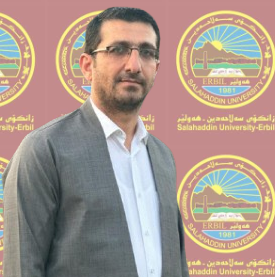
Full Name: Dr. Dler Mustafa Khidhr
Academic Title: Lecturer
Date of Birth:
Place of Birth:
Religion: Muslim
Ethnicity: Kurdish
General Specialization: Applied Statistics & Bayesian
Specific Specialization: Bayesian Shrinkage in Linear Models with an Application to Genetic Networks
Occupation: University Lecturer Workplace: Salahaddin University – College of Basic Education – Department of Mathematics
Phone Numbers:
+964 750 494 7173
I have Ph.D. from Sheffield University – United Kingdom in the field of Statistics.
- • B.Sc. in Statistics from the Salahaddin University -Erbil in July 2002 at the College of Administration and Economics.
- • MSc. degree in applied statistics at the University of Mosul in May 2007, at College of Sciences of mathematics and computer.
- • Ph.D. from Sheffield University- United Kingdom. in 2020 at College of Sciences -School of Mathematics- department of Probability and Statistics. /li>
My research lies in the area of applied Statistics and Bayesian statistics, particularly focusing on Bayesian Statistics, Shrinkage Methods, Linear Models, Hierarchical Regression, Applied Statistics, Autoregressive model, Classical Reduction, Educational Statistics, and their applications in real-life scenarios. Additionally, I study the factor analysis for real life behaviour in education sector and some characterize among children.
Mission
Our mission in the Mathematics Department is to provide high-quality education in mathematical theory, problem-solving, and applied mathematics, preparing students to become skilled educators, researchers, and professionals. We aim to equip graduates with strong analytical and logical reasoning skills that can be applied in education, government institutions, and the private sector.
Through a comprehensive curriculum, research-based learning, and hands-on teaching experience, the department works to:
- Build proficiency in algebra, geometry, calculus, statistics, and applied mathematics.
- Train competent educators to effectively teach mathematics in primary and secondary schools.
- Promote analytical and critical thinking skills to address real-world problems across various fields.
- Integrate modern educational technology into math teaching and research.
- Support research and innovation in mathematical sciences.
- Engage with the community by fostering partnerships with educational institutions and industries.
Vision
The Mathematics Department aims to be a top academic center for math education and research, promoting excellence in teaching, problem-solving, and analytical thinking. Our vision is to prepare skilled graduates with strong math knowledge, critical thinking skills, and modern teaching methods to make a positive impact in education, research, and industry.
Through innovative courses, use of technology, and hands-on training, we strive to develop capable educators and professionals who can apply math to real-world challenges. The department is dedicated to advancing math knowledge and its practical uses, ensuring graduates contribute significantly to education, science, and technology in the community and beyond.
Learning Outcomes
Graduates of the department of the Mathematics Upon successfully completing the Bachelor of Science (B.Sc) in Mathematics, graduates will be able to:
- Mathematical Knowledge & Understanding: Understand key mathematical concepts such as algebra, calculus, geometry, statistics, and probability deeply. Apply mathematical theories and problem-solving methods to real-world situations.
- Analytical & Critical Thinking Skills: Use logical reasoning and critical thinking to solve complex math problems. Interpret mathematical models and data to make well-informed decisions.
- Application of Mathematics in Education & Industry: Use math concepts in teaching, research, and applied fields like finance, computing, and engineering. Apply statistical and analytical methods in scientific research, economics, and technology development.
- Effective Teaching & Communication Skills: Design and deliver math lessons using modern teaching methods. Clearly explain mathematical ideas to a variety of audiences, including students and professionals.
- Research & Inquiry-Based Learning: Conduct math research and investigations using logical reasoning and computational tools. Use data analysis and modeling to understand complex math situations.
- Technological & Computational Proficiency: Use math software, programming, and digital tools to solve problems. Integrate technology into teaching and learning to improve math education.
- Adaptability & Lifelong Learning: Adapt to new math challenges and emerging areas in the field. Commit to ongoing learning and professional growth to stay updated in mathematics.
- Professional & Ethical Responsibility: Demonstrate ethics and professionalism in applying and teaching mathematics. Understand the social and ethical effects of math in education, science, and technology.
- Collaboration & Teamwork: Work well in interdisciplinary teams, sharing math expertise across fields. Collaborate with educators, researchers, and industry professionals to create innovative solutions.
- Contribution to Mathematical Education & Research: Promote math literacy and education in schools and academic settings. Contribute to the growth of mathematical knowledge through research and scholarly work.
The Mathematics Department maintains a strong partnership with the Ministry of Education (MoE), allowing students to gain valuable classroom experience through teaching internships in public schools. Additionally, students take part in an extended school-based observation program, where they observe and learn from experienced teachers over the course of a semester.
Looking forward, the department aims to establish new partnerships with both local and international mathematics departments. These collaborations will focus on supporting professional development, enhancing research opportunities, and improving the overall learning experience for students.
Degree Program Overview
The Department Mathematics awards a Bachelor’s degree in Mathematics
Key features of the mathematics program include:
- Core courses: includes subjects such as (Calculus, Foundation of mathematics, Finite mathematics, Statistics, Probability, Education psychology, measurement and Evaluation, Methods of Teaching Mathematics, Programming, micro-teaching. Differential Equation, Mathematical Analysis, Linear Algebra, Advanced Calculus, Euclidean Geometry...et)
- Elective courses: Diversity Education, Psychology of Children, Special Education, Programming).
- Research project: In the last of the year to develop the student prepares a graduation research project within the department’s specialization such as (pure area, applied Mathe, Educational fields).
Postgraduate Studies
The Department of Mathematics offers postgraduate programs designed to develop advanced expertise and research capabilities across a range of mathematical fields. Program options and specializations may vary depending on the institution.
- Program Tracks / Specializations
- Postgraduate students may choose between different study tracks, such as:
- Thesis Track:
- Focused on academic research, this track is ideal for students aiming to pursue a Ph.D. or careers in research and academia.
- Program Offerings
- Master’s Degree (M.Sc. or M.A.)
- Focus Areas:
- The master’s program emphasizes interdisciplinary knowledge across key mathematical domains, preparing students to solve complex, real-world problems from multiple perspectives. Focus areas may include:
- Applied Mathematics
- Pure Mathematics
- Mathematics Education and Problem Solving
- Program Structure:
- The program spans two academic years and includes:
- First Year (30 ECTS):
- Core modules in mathematics, advanced statistics or programming, teaching methodologies in science, and research methods in education.
- Second Year (30 ECTS):
- Specialized courses in either applied or pure mathematics based on the chosen focus.
- Thesis or Research Project (60 ECTS):
- A major research component focused on developing the student’s capacity as a researcher or educator in mathematics or science education.
- Learning Outcomes:
- Graduates will be equipped with the skills to conduct scholarly research and contribute professionally in the fields of mathematics and educational sciences.
- Doctor of Philosophy (Ph.D.)
- Specializations:
- Ph.D. programs are available in select areas, with Applied Mathematics being one of the current offerings. (To date, one student has successfully completed a Ph.D. in Applied Mathematics.)
- Focus:
- Doctoral studies involve deep specialization and original research contributions to the field, preparing students for academic, research, and leadership roles in mathematics and education.
- Master’s Degree (M.Sc. or M.A.)
Program learning outcome
Graduates from the Department of General Sciences at Salahaddin University-Erbil will achieve the following learning outcomes upon successful completion of the General Sciences programs:
- Comprehensive Knowledge Demonstrate extensive understanding of core biological concepts, including molecular biology, genetics, physiology, microbiology, botany, and zoology. This includes knowledge of living organisms’ structure, function, and interactions at molecular, cellular, organismal, and ecological levels.
- Critical Thinking and Problem-Solving Apply critical thinking skills and scientific reasoning to design experiments, collect and analyze data, and interpret findings. Graduates will be capable of solving biological problems and contributing to new scientific discoveries.
- Laboratory and Technical Proficiency Establish competency in laboratory procedures, including using contemporary biological instruments and technologies. This includes techniques in microbiology, molecular biology, genetics, histology, and biochemistry, ensuring readiness for research and professional practice.
- Ethical and Professional Conduct Uphold ethical standards and integrity in scientific research, laboratory work, and professional activities. Graduates will understand biosafety and biosecurity principles and apply them responsibly.
- Effective Communication Effectively communicate scientific information, findings, and concepts to diverse audiences through verbal presentations, scientific writing, and visual data representation. This includes writing research reports and presenting findings in professional settings.
- Career Readiness Pursue careers in medical laboratories, research institutions, pharmaceutical companies, quality control centers, and educational settings. Graduates will be equipped to contribute to disease diagnosis, prevention, treatment, and public health promotion.
- Lifelong Learning and Adaptability Engage in lifelong learning to stay current with advances in biological sciences and emerging technologies. Graduates will demonstrate adaptability to new scientific methods and concepts, fostering continuous professional development.
- Research Skills Conduct independent research and contribute to scientific progress by formulating hypotheses, conducting experiments, and analyzing results. Graduates will be prepared to pursue advanced studies or research-focused careers.
By achieving these outcomes, graduates from the Department of Biology will be well-prepared to address biological and health-related challenges, advance scientific knowledge, and serve their communities effectively.
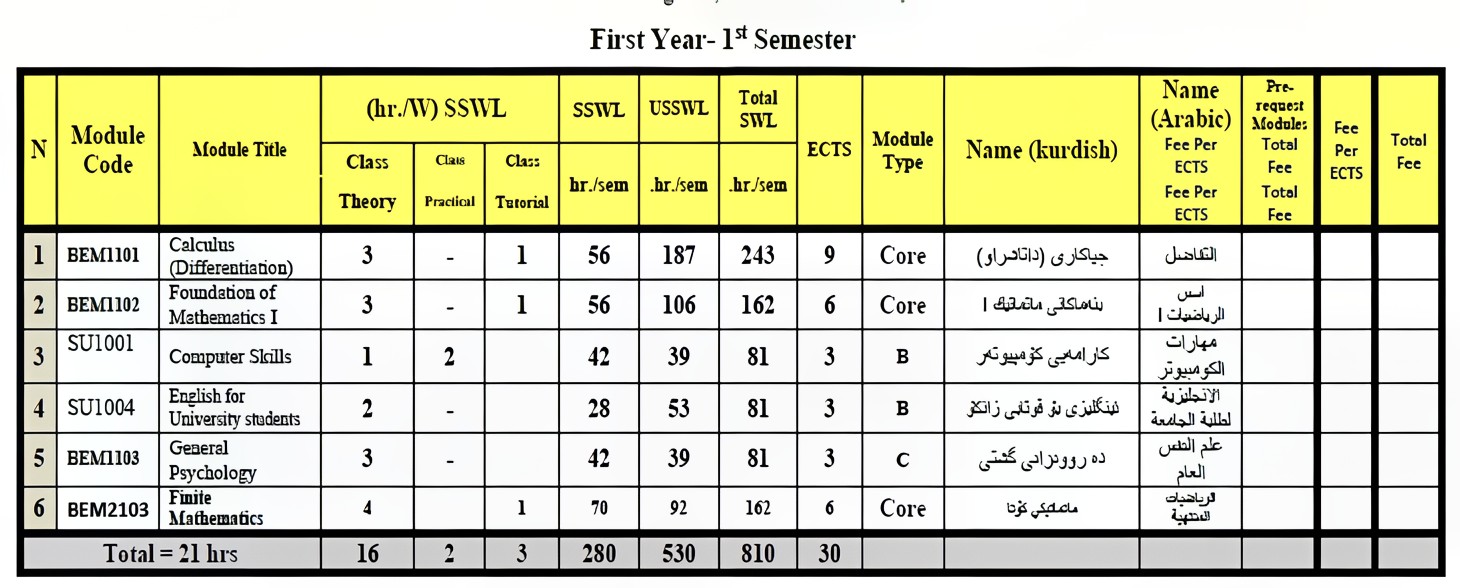
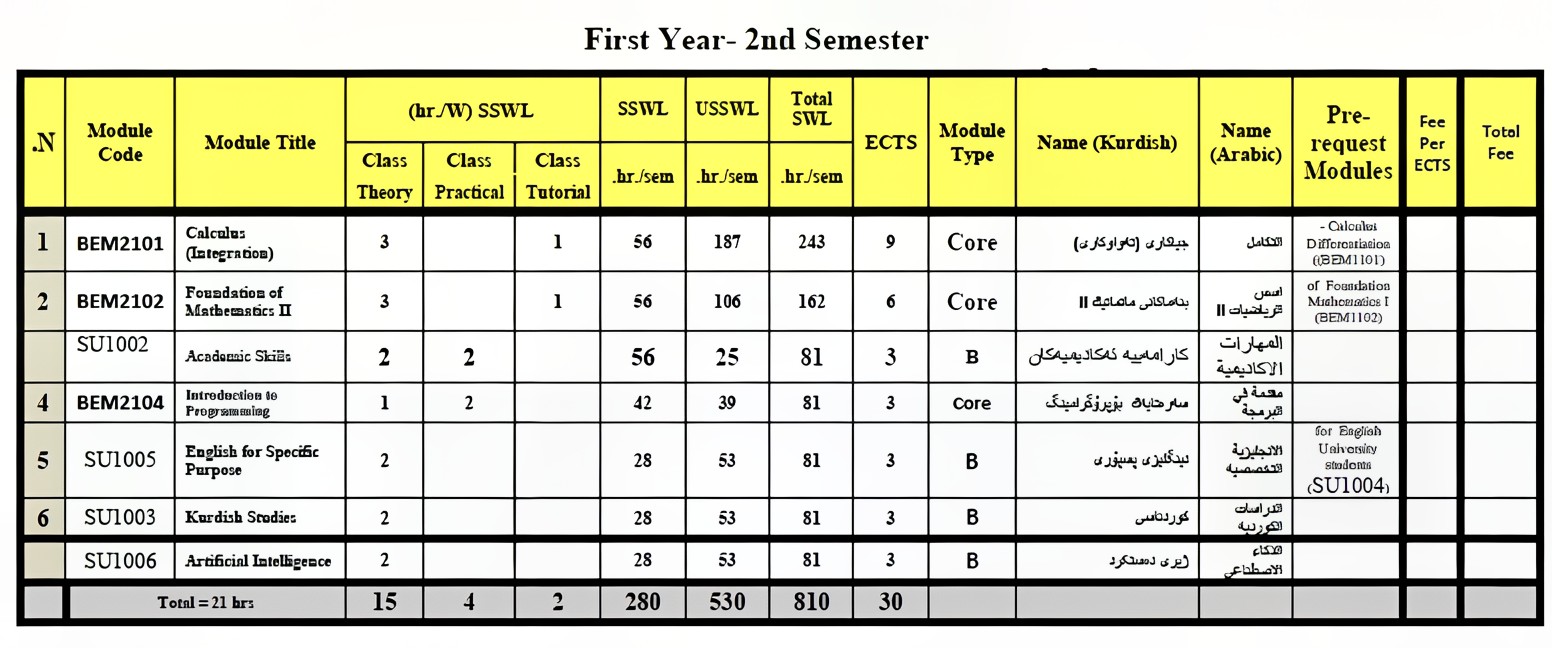
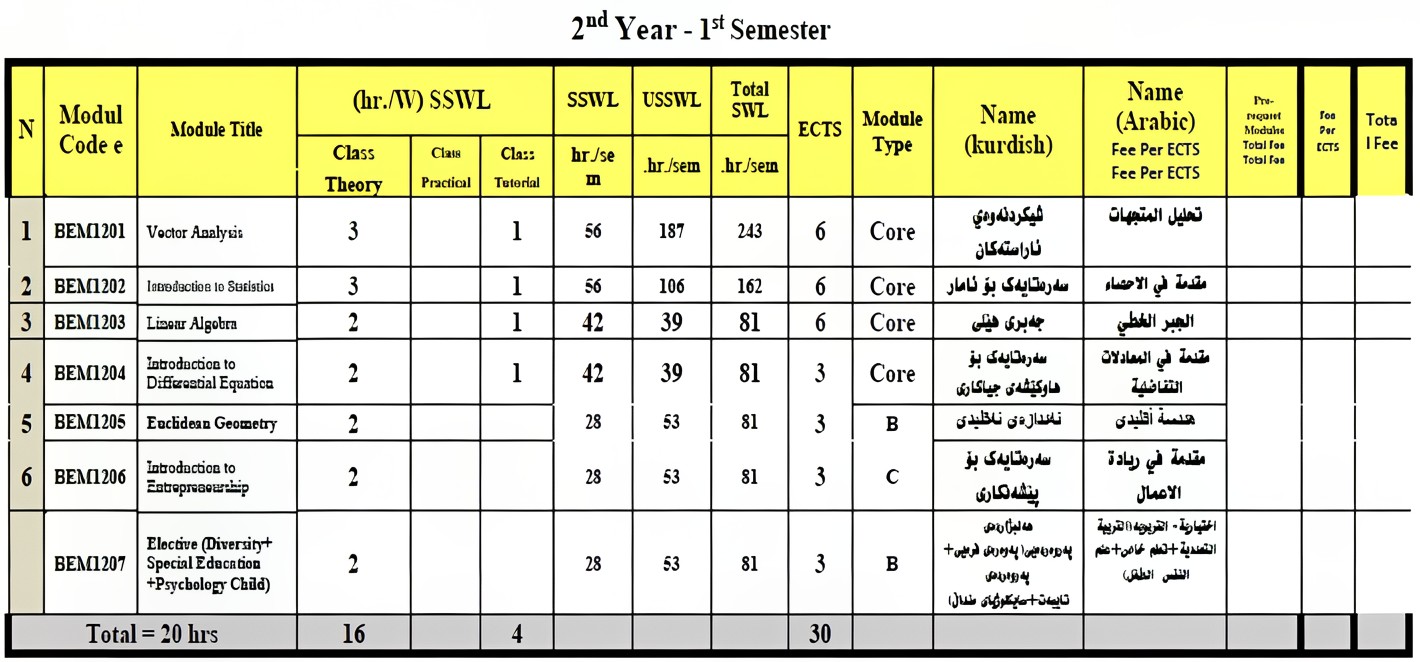
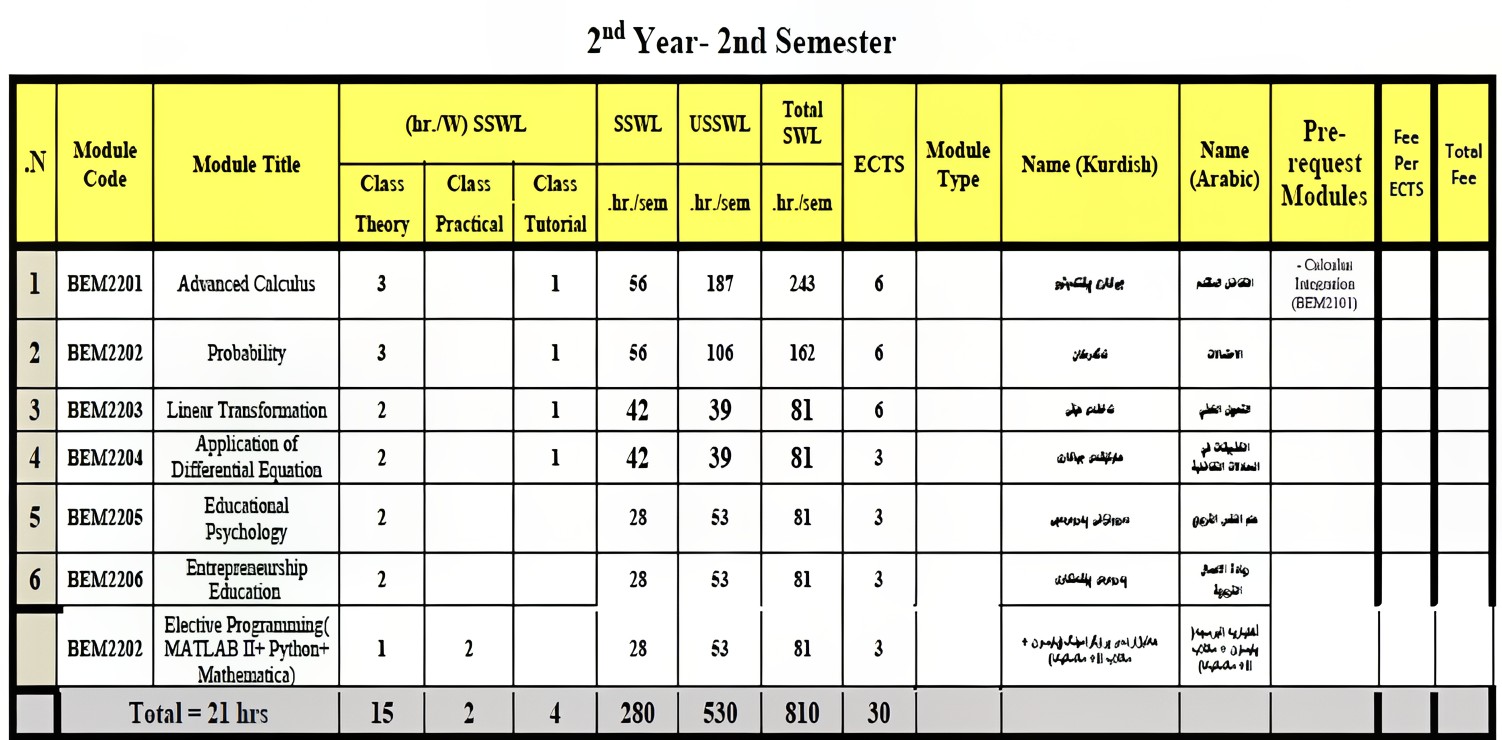
Bachelor's degree (B.Sc.) in Mathematics (First Cycle)
Four Year's Curriculum Program, 240 ECTS Credits, 1 ECTS = 27hrs.
Admissions
The Mathematics Department provides three study pathways to accommodate a variety of student needs and backgrounds, ensuring both accessibility and flexibility:
- Zankoline (Government-Sponsored Program)
- Overview
- This route offers tuition-free education for students who meet specific eligibility criteria and are admitted through the national centralized admission system known as "Zankoline."
- Eligibility & Advantages:
- Applicants must satisfy the academic standards set by the Ministry of Higher Education and Scientific Research.
- Admission is merit-based, with emphasis on high school performance, especially in science subjects.
- Tuition fees are fully waived.
- Students gain full access to university facilities such as laboratories, libraries, and extracurricular programs.
- Eligible for scholarships and other state-supported programs.
- Parallel Study (Privately Funded Program)
- Overview:
- This option is available for students who are not accepted through the Zankoline system but still wish to study by covering the tuition costs themselves.
- Annual Tuition Fee: 1,250,000 IQD
- Eligibility & Advantages:
- Must meet the department's basic academic entry requirements.
- Offers an alternative for students who didn’t obtain a government-funded seat.
- Provides the same standard of education, academic resources, and university services as the Zankoline program.
- Ensures access to academic and professional development, free from centralized admission limitations.
- Special Study (Partially Funded Program)
- Overview:
- Designed for working individuals and teachers with lower academic qualifications. Admission is arranged through the Ministry of Education, with a limited number of seats available and a reduced tuition rate.
- Annual Tuition Fee: 600,000 IQD
Admission Criteria for All Programs
- Academic Requirements:
- Successful completion of secondary school with a concentration in mathematics.
- Meet the minimum GPA threshold determined annually by the Ministry of Higher Education and Scientific Research.
- Application Procedures:
- Zankoline (Government-Funded):
- Apply via the centralized Zankoline system.
- Submit all required documentation, such as high school transcripts, national ID, and any relevant certificates according to the application guidelines.
- Parallel Study (Self-Funded):
- Apply directly through the Department of Mathematics for the parallel study option.
- Provide required documents, including academic records, ID, supporting certificates, and proof of tuition payment.
In recent years, the Department of General Sciences has graduated around 45 students. Many of these alumni have successfully built careers in teaching, educational services, and various scientific fields, working in both the public and private sectors.
Graduate Employability
Graduate Employability
- Bachelor of Science (B.Sc.) in Mathematics
- Career Paths:
- School science teachers in the public and private sectors
- Educational program facilitators
- Tutoring
- School administration and leadership
- Academic quality controllers in schools
- Skills for Employability:
- Strong Subject Knowledge
- Effective Teaching and Classroom Management
- Interpersonal Skills
- Curriculum and Program Design
- Assessment and Evaluation
- Lifelong learning skills
- Collaboration and Teamwork
- Adaptability and Innovation
- Master of Science (M.Sc.) and Education (M.Ed.) in Methods of Teaching in Mathematics
- Career Paths:
- Researcher
- Curriculum Developer
- Teacher Trainer
- Academic Coordinator
- School Vice Principal and Principal
- Policy Advisor
- University Lecturer
- Skills for Employability:
- Pedagogical Knowledge
- Curriculum Analysis
- Educational Research and Data Analysis
- Leadership
- Doctor of Philosophy (Ph.D.) in Mathematics and Methods of Teaching
- Career Paths:
- University Professor
- Faculty Member
- Researcher
- Writer and Educational Journal Member
- Education Consultant
- Dean
- Skills for Employability:
- Research and Academic Writing
- Language Skills
- Leadership and Strategic Planning
- Innovation
- Critical thinking
- Mentorship and Supervision
Academic Advising
Primary Role: Supporting students with academic planning and course selection, and monitoring academic performance to help achieve success and timely graduation.
Practical Outcomes: The advisor develops a personalized plan aligned with career goals—recommending courses and activities that support future career paths.
Comprehensive Support: Includes sessions on study skills, time management, crisis counseling, and connecting students with services such as special education and psychological support.
Internship Opportunities
- Benefits of Internships:
- Types of internship opportunities:
- How to Apply for Internships:
Internships are a vital way to connect theoretical knowledge with real-life professional application.
They span a variety of academic and professional fields, whether paid or voluntary.
They are typically coordinated by/through university-based collaborative work centers, or through partnerships with government and private institutions.
Gain practical experience that helps enhance and differentiate your CV.
Understand the dynamics of work and build professional networks within the sector.
Explore career interests and gain real-life experience in your field of specialization before graduating.
nternships: Paid or unpaid, full-time or part-time, typically lasting from 1 to 4 months.
Work-Integrated Learning: Includes programs such as co-op, clinical or field placements, research projects, and school-based community service.
Receive academic/career guidance to identify appropriate options.
Prepare a resume and cover letter with the help of the Career Center or its services.
Use the workshops and interview simulations offered.
Follow the university's platforms to learn about opportunities and apply.
Career Services
The Department of Mathematics is committed to supporting students in their career development through a range of services designed to help them achieve their professional goals—whether they plan to pursue graduate studies, enter the workforce, or explore entrepreneurial paths. These services equip students with the tools, knowledge, and confidence needed to successfully navigate the job market.
Career guidance is primarily provided by the university’s Career Center, which offers a variety of resources to prepare students for life after graduation. Additionally, the department maintains strong ties with local and private schools, many of which actively recruit its graduates.
- CV and resume writing assistance
- Job search support and interview preparation
- Updates on teaching vacancies via the department’s school partnerships
- Secure teaching positions in both public and private schools
- Take part in interviews and recruitment events organized through the department’s network
- Enhance their employment prospects immediately after graduation